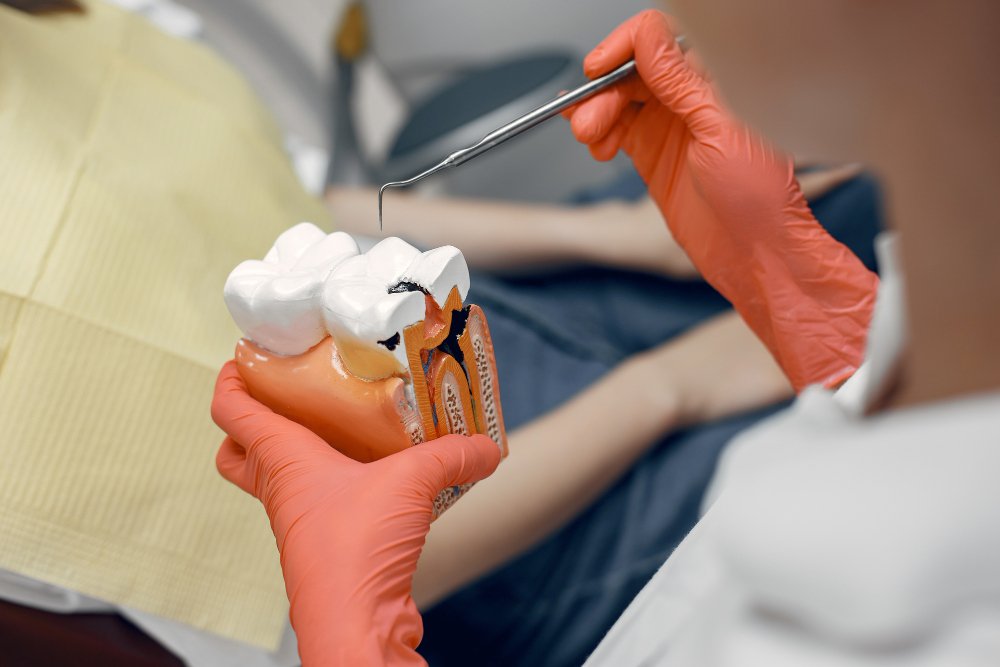
Save your natural tooth with modern root canal therapy — a painless procedure that removes infection and restores the tooth for years of healthy function.
SERVICEmedical_servicesVOADENT Dental Clinic·Torun Center · Şişli · İstanbul
Would you like to learn more about Root Canal Treatment or book an appointment?
Endodontics deals with the soft tissue inside your teeth — the pulp that contains nerves and blood vessels. When that tissue becomes infected or damaged, root canal treatment can save the tooth and relieve your pain.
What is Root Canal Treatment?
When the pulp (the nerve-and-vessel bundle deep inside a tooth) is damaged by trauma, infection or advanced decay, root canal treatment is the way to save it. Common signs include intense sensitivity to hot or cold, a persistent toothache, abscess formation or a darkened tooth.
During the procedure, the inflamed or dead pulp is carefully removed from the root canals, the space is thoroughly disinfected and then sealed with a biocompatible filling material (gutta-percha) to prevent reinfection.
How is Root Canal Treatment Performed?
Teeth are anesthetized with local anesthetics (painless)
All decayed tissue is removed
Pulp is accessed through canal openings
Root canal length is determined (using apex locator or radiographs)
Canals are cleaned mechanically with files/rotary systems and chemically with special solutions
Disinfected canals are filled with gutta-percha
Temporary or final restorations are placed; porcelain covering is recommended
Fiber Post Application
A procedure in which fiber rods are placed into the root canals of teeth with excessive material loss to increase restoration durability after root canal treatment.
Root canal treatment must first be completed
The canal and pulp chamber are shaped
Appropriately sized fiber rods are placed in the prepared canals
Filling material is applied around the rod to reshape the tooth
Can be finalized as-is or designed for porcelain restoration placement
Frequently Asked Questions
Is root canal treatment painful?
Modern local anesthetics are highly effective; the treatment remains painless during the procedure.
How is the need for root canal treatment recognized?
Night pain interrupting sleep, excessive sensitivity to hot/cold, inability to chew on the tooth, spontaneous prolonged pain, abscess formation and swelling indicate the need for treatment. Routine dental exams can also reveal it.
Is there pain after root canal treatment?
Some pain for several days is normal. Stubborn infections may cause extended discomfort, though it is typically tolerable.
What precautions should be taken after treatment?
Treatment may take 1–3 sessions. Avoid eating while anesthetized. Protect temporary fillings between sessions. Regular tooth maintenance positively affects success.
Should medication be taken afterward?
Pain relievers may be recommended if pain persists. Antibiotics are generally not necessary unless prescribed.
How long does a root canal-treated tooth last?
A properly executed root canal-treated tooth can remain functional for life with consistent cleaning and regular checkups.
Can a previously treated tooth develop decay?
Yes. Unlike living teeth with self-protection mechanisms, root canal-treated teeth are non-vital and require more careful maintenance and 6-month clinical examinations plus radiographic monitoring.
Can previously treated teeth need retreatment?
Yes, inadequate root canal treatment may require retreatment, though success rates drop to approximately 60%, remaining a viable option to preserve the tooth.
Is maintenance of root canal-treated teeth necessary?
Yes, both regular maintenance and routine checkups are essential since these teeth cannot protect themselves.
Is fiber post application painful?
No, fiber post applications are painless procedures, typically completed during the final root canal treatment session.