Would you like to learn more about Orthodontic Treatments or book an appointment?
Book via WhatsApp

Orthodontic Treatments

Orthodontics focuses on moving misaligned teeth into their ideal positions — improving not only your smile but also your ability to chew and keep your teeth clean.

Clear Aligners (Invisalign®)

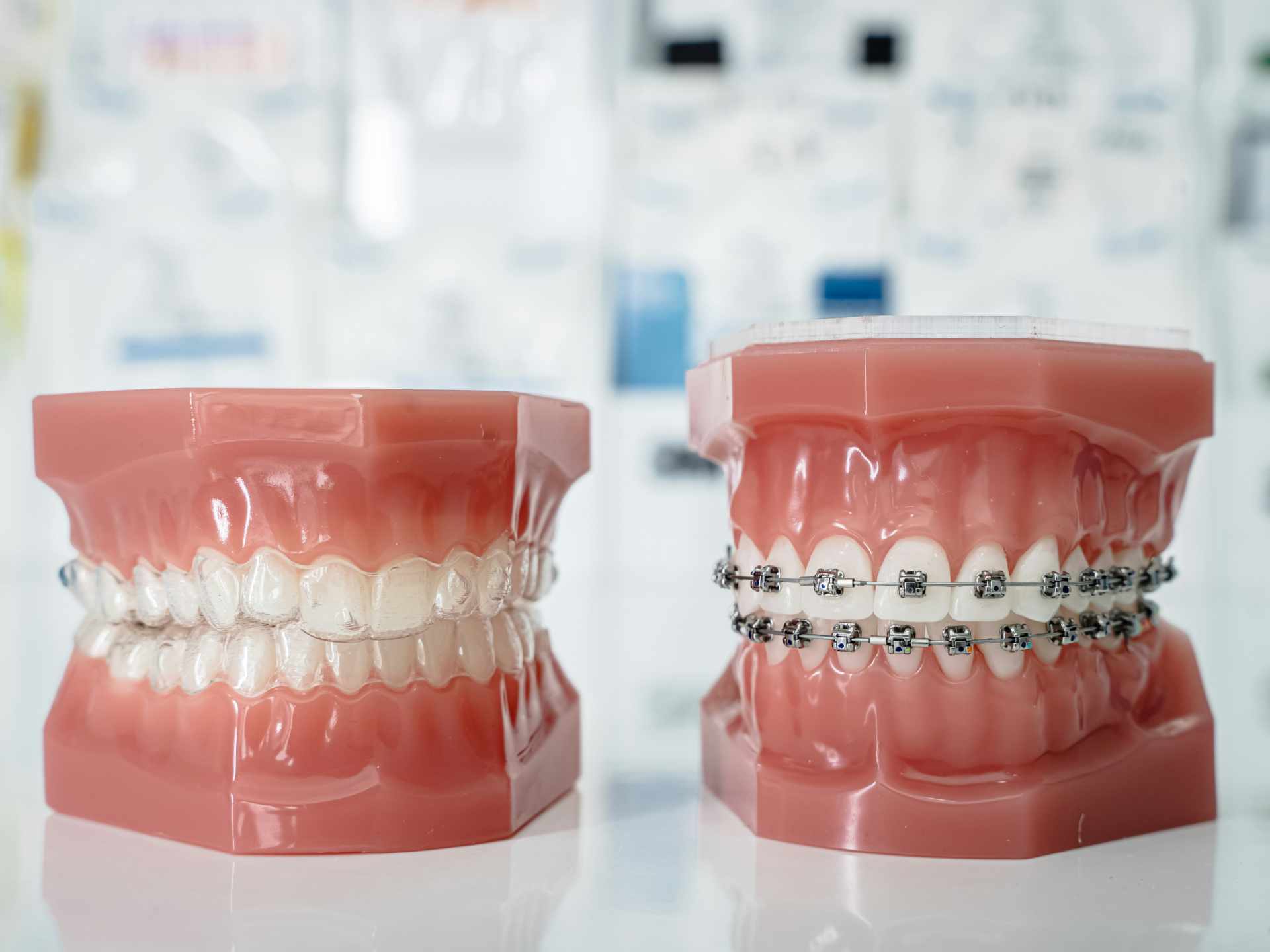
The most preferred orthodontic treatment method in recent years. Based on custom-made transparent aligners that are changed every 2 weeks. The primary advantage is that patients can remove the aligners whenever they wish. Photography documentation occurs at each session to monitor changes. A simulation showing tooth changes during treatment and the final appearance is provided before starting.

Metal Braces (Traditional Braces)

The classic orthodontic method using small metal bracket structures attached to the front surfaces of teeth. Orthodontic wires inserted into the bracket slots enable tooth movement. Monthly adjustments involve wire changes following continuous force application principles.

Ceramic Braces (Aesthetic Braces)

Porcelain brackets designed for a more aesthetic appearance than metal brackets. Treatment mechanics are identical to metal brackets, with wires inserted into bracket slots enabling movement through monthly adjustments and continuous force application.

Intraoral Appliances

Intraoral appliances that control problems resulting from childhood habit disorders. Causes include:

  • Mouth breathing and gum problems
  • Prolonged pacifier use
  • Finger-sucking habits
  • Cleft palate/lip conditions
  • Tooth loss
  • Traumatic jaw injuries
  • Inherited jaw position/structure differences
  • History of early primary tooth extraction

Functional Jaw Orthopedics

A treatment method applicable during childhood that uses appliances to direct jaw bone growth patterns. Bone growth direction and velocity can be modified orthopedically, preventing future dental misalignment. A safe treatment for children during developmental stages.

Retention Therapy

Applied after orthodontic treatment completion to prevent teeth from returning to their original positions. Planned without comfort disruption or aesthetic problems.

  • Fixed retention: A thin wire (Retainer) securing anterior teeth invisibly on the inner tooth surfaces
  • Removable retention: 1.5–2 mm thick transparent plates worn nightly during sleep

Frequently Asked Questions

When should the first orthodontic examination be done?
Check-up appointments are necessary from the eruption of the first primary tooth. Early diagnosis enables easier and less complicated treatment.
Is there an age limit for orthodontics?
Orthodontics can be safely applied to all age groups.
Which treatment option should I choose?
Analysis and planning are the most important stages. The process includes plaster model registration, intraoral and extraoral photography, and detailed planning based on data. Your dentist will present suitable treatment options according to analysis findings.
Will I experience pain during orthodontic treatment?
Mild pain typically occurs during the early phases of treatment. Pain resolves after the rapid adaptation period.
What should I do if my wire or bracket breaks?
Contact your dentist. The affected tooth is not harmed by the breakage.
Are healthy teeth extracted for orthodontic treatment?
Tooth extraction addresses crowding through space creation. Subsequent planning completely eliminates existing gaps.
Will orthodontic treatment cause tooth decay?
Treatment has no tooth decay side effect, but decay may occur without proper oral hygiene following dentist recommendations.
Will my teeth turn yellow during treatment?
Inadequate hygiene and excessive use of staining products (tea, coffee, cigarettes) cause yellowing. Following recommended oral care prevents these situations.
Will there be problems after retention therapy ends?
Problems rarely occur when six-monthly check-ups are maintained.
Will the retention wire stay in my mouth permanently?
Without additional recommendations, the retention wire typically remains for double the treatment duration. Some cases require lifetime retention.
Will the retention wire affect my speech?
Patient adaptation occurs rapidly. Normal speech habits return within 2–3 days.
Will my teeth shift back after orthodontic treatment?
Teeth and bone structures naturally tend to revert to their original positions. Retention therapy and regular check-ups are essential.
arrow_back All Services