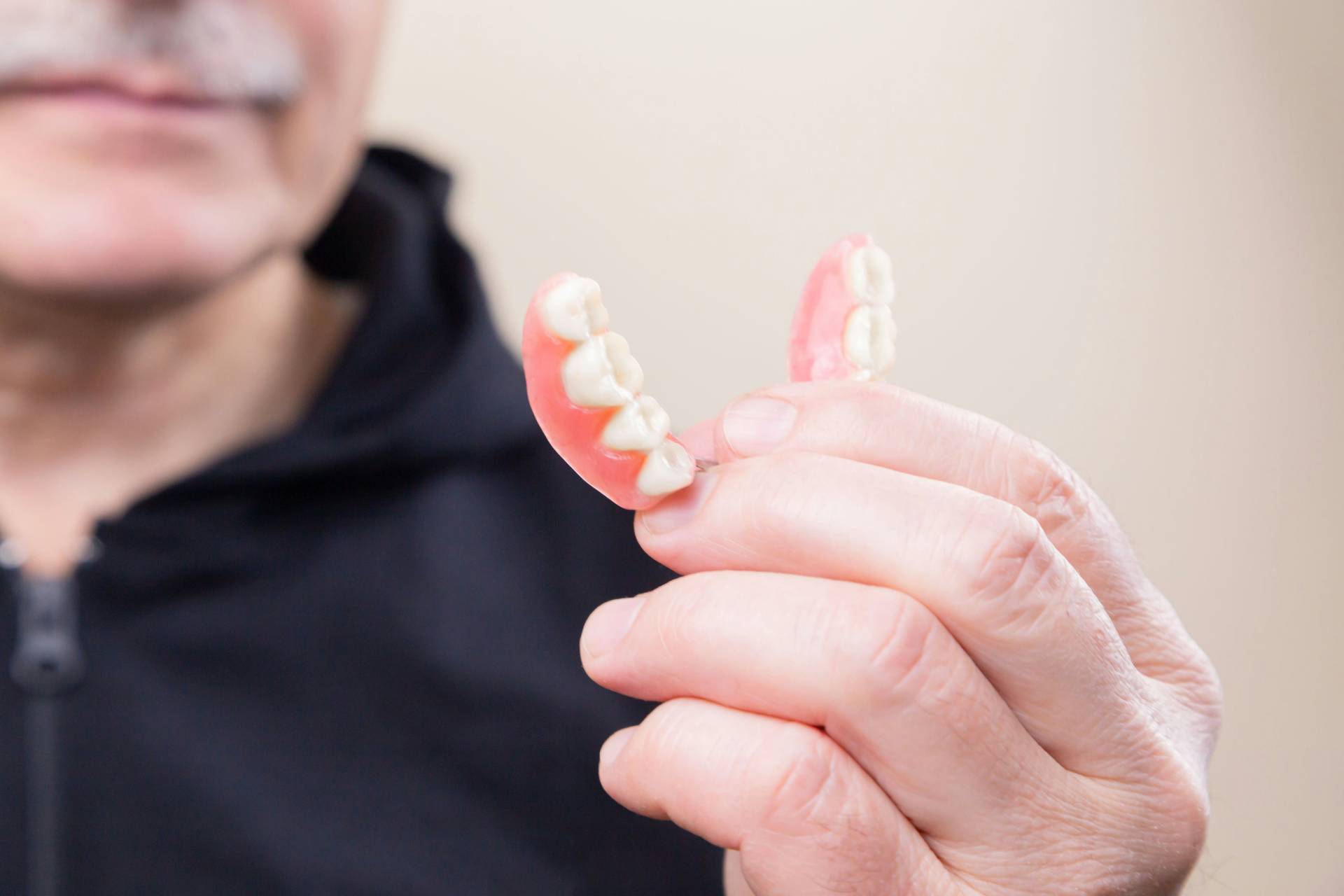
Full dentures, precision-attachment partials or implant-supported hybrids — we restore missing teeth with prosthetics tailored to your comfort and lifestyle.
SERVICEmedical_servicesVOADENT Dental Clinic·Torun Center · Şişli · İstanbul
Would you like to learn more about Dental Prosthetics or book an appointment?
Whether you are missing a single tooth or a full arch, prosthetic dentistry restores both the look and function of your smile with custom-crafted replacements.
Complete Dentures (Full Dentures)
Prosthetics applied to edentulous jaws, supported by soft tissues, fitting around the jawbone like a saddle using classical prosthetic methods.
Custom impression trays are used to take measurements. Fabrication takes approximately one week. Soft tissue adaptation takes longer and requires patient-dentist cooperation during the adjustment period. Retention depends entirely on bone and gum quantity and density.
Precision Attachment Prosthetics
Applied in cases of partial tooth loss. These gain support from both hard tissues (teeth) and soft tissues (gum/bone). They offer high retention and comfort levels, commonly known as "snap/click dentures."
Metal-supported porcelain is first applied to remaining teeth, with male attachment components positioned on these restorations. New measurements are taken for designing the removable sections. Complementary attachment components are placed inside the mobile portions. Fabrication requires 2–3 weeks across two phases.
Hybrid Prosthetics
Designed specifically for implant-supported applications. Selection depends on patient jaw bone volume and quality relative to implant planning. The most comfortable option for edentulous patients.
Following implant completion, special implant abutment components are used to obtain measurements for prosthetic planning. Each fabrication stage involves intraoral trials. Prosthetics are secured via internal screws specific to patient implants and are designed to remain fixed in the oral cavity.
With "All-on-Four" protocols, fabrication can sometimes be completed within 48 hours, allowing temporary prosthetic placement on implant placement day.
Frequently Asked Questions
Which prosthetic should I choose?
Selection follows comfort levels from highest to lowest. Tooth presence, gum/bone health quality and tooth loss location determine the options available. Dentists present suitable options while respecting patient preferences regarding acceptability and cost.
I lost all my teeth — must I get complete dentures?
Patients without prior experience with transitional prosthetics often struggle to adapt to complete dentures. For this reason, implant-supported hybrid prosthetics are frequently recommended instead.
Can I eat with prosthetics?
Prosthetics prioritize function before aesthetics. Fixed or hybrid prosthetics enable normal cutting, biting and chewing. Complete dentures, being mobile, may require some functional compromise — supporting recommendations for hybrid alternatives.
How should I clean my prosthetics?
Fixed prosthetics are cleaned like natural teeth: using interdental brushes and floss for margins and bridge undersides. Removable sections can be extracted and brushed. Complete dentures should be removed nightly, cleaned and stored dry.
What precautions should I take?
Prioritize cleaning. Fixed prosthetics require standard methods (toothbrush, floss). Complete dentures must be removed nightly, cleaned and stored dry — moisture encourages bacterial growth and discoloration.
Can broken prosthetics be repaired?
Removable prosthetics offer the greatest advantage: they can be extracted and repaired in the laboratory. Fixed prosthetics may receive intraoral repairs; however, significant or recurring fractures may necessitate replacement.
Can identical prosthetics be replicated?
Replication is possible using measurements and photographs, though replacement with improvements to unsatisfactory areas is preferred.
Do weight changes affect prosthetic retention?
When retention issues arise (prosthetic dislodging, tissue impingement), laboratory adjustment restores optimal fit.
Can patients with systemic conditions receive prosthetics?
No prosthetic approach presents systemic contraindications. Bone loss or diabetic patients can receive mobile or fixed prosthetics if local hard tissues remain healthy. Hybrid prosthetics require adequate local bone density and systemically controlled health status.
Do prosthetics have a lifespan?
Yes. Minimum expected duration is four years, extendable through proper cleaning and maintenance. Complete porcelain and complete dentures are designed for the longest retention; proper maintenance allows lifelong use.