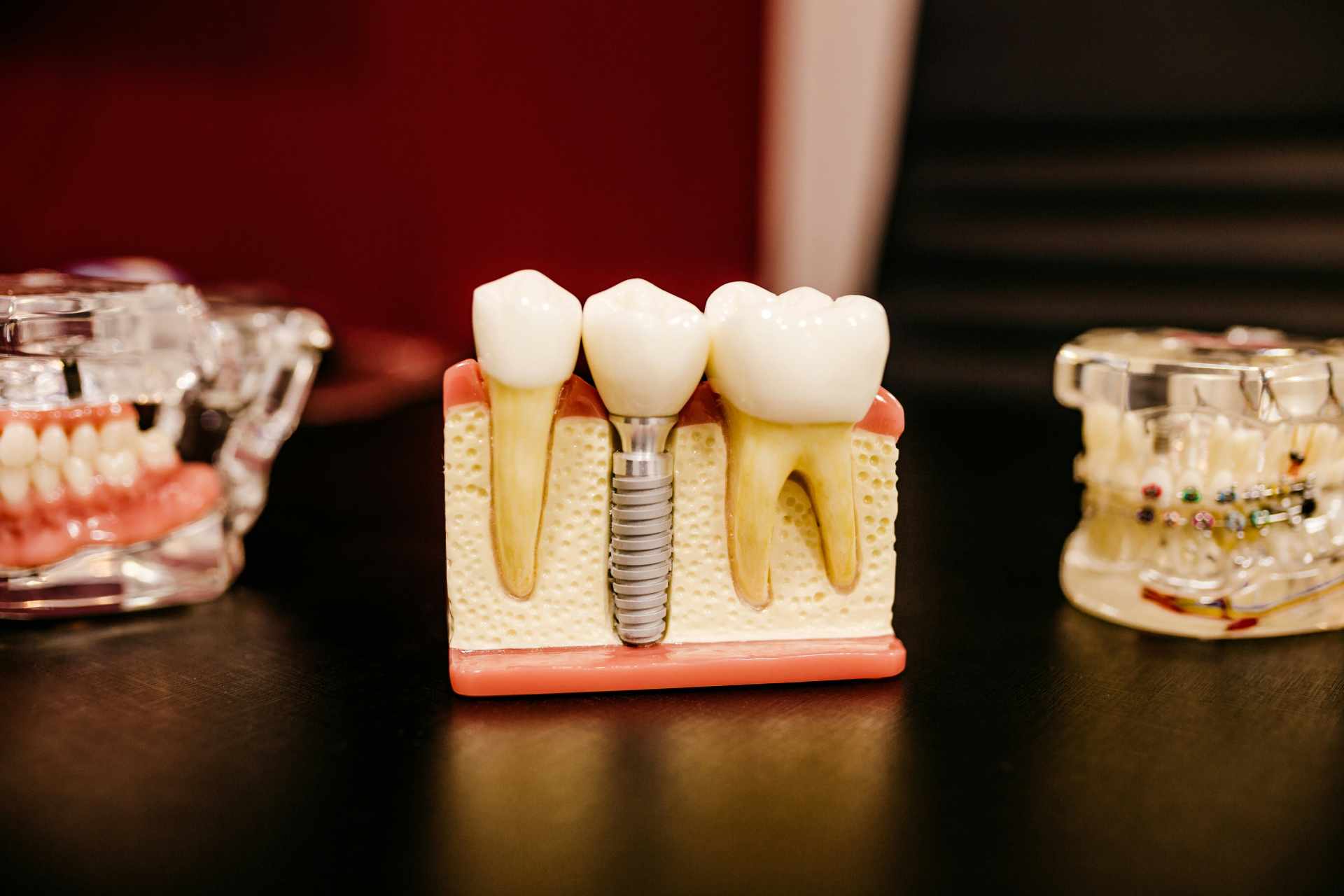
Replace missing teeth with titanium implants that look, feel and function just like natural teeth — no bridges, no removable dentures, just a permanent solution.
SERVICEmedical_servicesVOADENT Dental Clinic·Torun Center · Şişli · İstanbul
Would you like to learn more about Dental Implant Treatments or book an appointment?
Dental implants are titanium screw-shaped structures that mimic the natural tooth root. They offer a permanent solution for single or multiple missing teeth — without cutting into adjacent healthy teeth or relying on removable dentures.
Dental Implant Treatment
A socket is created in the bone under local anesthesia and a titanium implant is placed. The procedure typically takes 15 minutes. Sutures are removed after 1 week. A 2–3 month osseointegration (bone fusion) period is required. Bone augmentation may be necessary in some cases.
All-on-Four
Addresses complete tooth loss using 4 strategically positioned implants to support a full-arch restoration. Advantageous for patients with inadequate bone volume, eliminating the need for bone grafting in most cases.
Bone Augmentation and Sinus Lifting
Advanced surgical methods using the patient's own bone or biocompatible bone materials. Sinus lifting addresses vertical bone deficiency in the upper jaw.
Peri-implant Diseases
Covers peri-implant mucositis and peri-implantitis conditions resulting from inadequate oral hygiene around implants. These can be prevented with regular maintenance and check-ups.
Frequently Asked Questions
Can implants be applied to everyone?
Uncontrolled systemic diseases, recent chemotherapy/radiotherapy and bone metabolism disorders are contraindications for implants. Otherwise, they can be applied to everyone.
Is there an age limit for implants?
Implants require completed skeletal growth: minimum 17–18 years for males, 16–17 years for females.
Can implants be placed in diabetic patients?
Controlled diabetes with normal HbA1c levels permits safe implant placement; uncontrolled diabetes poses significant risk.
Can implants be placed in smokers?
Smoking severely compromises healing; research shows implant failure rates are significantly higher in smokers.
Do implants cause allergies?
Titanium exhibits biocompatibility; allergic reactions do not occur.
Do implants cause cancer?
No scientific evidence connects implants to cancer development.
Is 3D imaging necessary?
Three-dimensional imaging is essential for proper implant planning; implants planned without 3D imaging are not recommended.
What if there is insufficient jawbone?
The patient's own bone tissue or biocompatible bone powders can restore volume. Procedures may be performed simultaneously with implant placement or require a 6–9 month healing period.
Can implants be applied for all types of tooth loss?
With no systemic or local contraindications, implants can be applied to all tooth loss situations.
Can each missing tooth be replaced with an implant?
Multiple missing teeth often involve bridge-type planning. A single implant may support two teeth in specific cases.
How is the number of implants calculated?
The number of implants varies case by case; there is no universal formula.
Can multiple implants be placed in one session?
Procedures can progress by region or both arches simultaneously, prioritizing patient comfort.
Are there complaints during the healing period?
Mild swelling and color changes may occur; prescribed medications and cold therapy significantly reduce symptoms.
Are dental implants long-lasting?
With proper daily care and periodic professional maintenance, implants last as long as natural teeth. Neglect leads to disease and failure.
Can an implant be lost?
Loss can occur with uncontrolled systemic disease, insufficient bone support, active infection, non-sterile surgery, improper tissue evaluation, unhygienic crowns, poor daily care or absent professional follow-up.
Is it possible to use implants for a lifetime?
Well-planned implants with non-irritating, cleanable crowns maintain function for life with periodic professional monitoring.
How should implants be maintained?
Standard or electric toothbrushes supplemented by interdental brushes, specialized floss and oral irrigation are recommended. Periodic professional evaluation, radiographs and professional cleaning with infection prevention protocols are required.